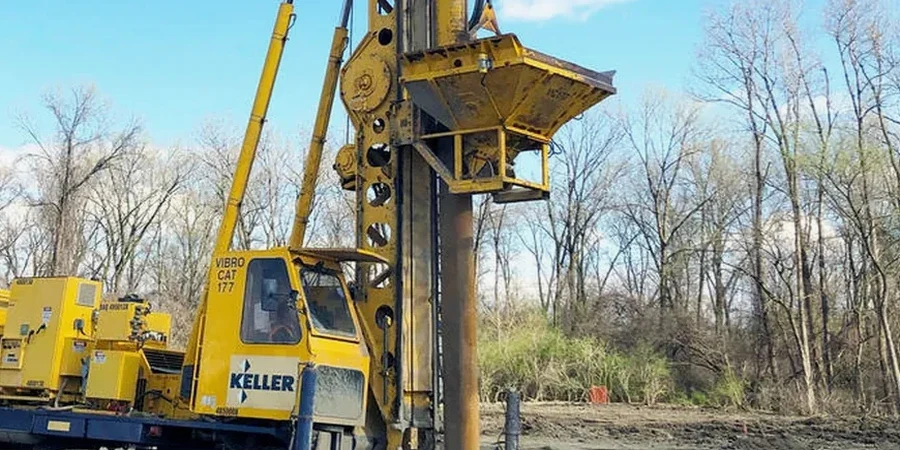
The Missoula valley floor sits on deep deposits of glacial Lake Missoula sediments and recent alluvium from the Clark Fork River. Much of it is loose sand and silty sand with a water table often within 5 to 10 feet of the surface. That combination creates a real risk of settlement and liquefaction. We design vibrocompaction programs that densify these soils before footings go in. The work requires understanding the local stratigraphy—layers can shift from clean sand to silt in less than 50 feet horizontally. We specify grid spacing, probe energy, and verification testing based on site-specific CPT data. For deeper densification needs, we often recommend the CPT test as the primary investigation tool before finalizing the vibro design.
In Missoula, the difference between a successful vibro job and a failed one is usually the silt lens nobody mapped.
How we work
The most common error we see on Missoula projects: assuming a uniform sand profile and using a default triangular grid without checking for silt lenses. That leads to untreated zones and differential settlement later. Our design process starts with a detailed review of boring logs and CPT soundings. We map the liquefiable layers, set target relative densities (typically 70-85% per IBC), and calculate the required energy input. We specify the vibrator type, frequency range, and withdrawal rate. Field verification uses post-treatment SPT or CPT runs at the same locations. We also check for overhead obstructions—many in-town sites have old utilities that limit rig access. The Clark Fork floodplain is wide and flat, so water supply for jetting is usually available, but we design for the high groundwater conditions that can reduce effective energy transfer.
Questions and answers
What does vibrocompaction design cost for a typical Missoula site?
Design fees for a standard commercial lot in Missoula run US$1,520 to US$5,510 depending on site size, number of CPT soundings needed, and treatment depth. Larger industrial sites with complex stratigraphy run toward the upper end.
How deep can vibrocompaction treat in the Missoula valley?
Most Missoula valley projects treat 15 to 50 feet. The limit depends on the vibrator power and the depth to refusal. We design for the specific stratigraphy—if we hit a dense gravel layer, we stop. If loose sand continues deeper, we specify a larger rig.
Does vibrocompaction work with high groundwater?
Yes, and in Missoula high groundwater is the norm. The probe uses water jetting to advance, so saturated sand actually helps. We account for reduced effective energy transfer in our design calculations.