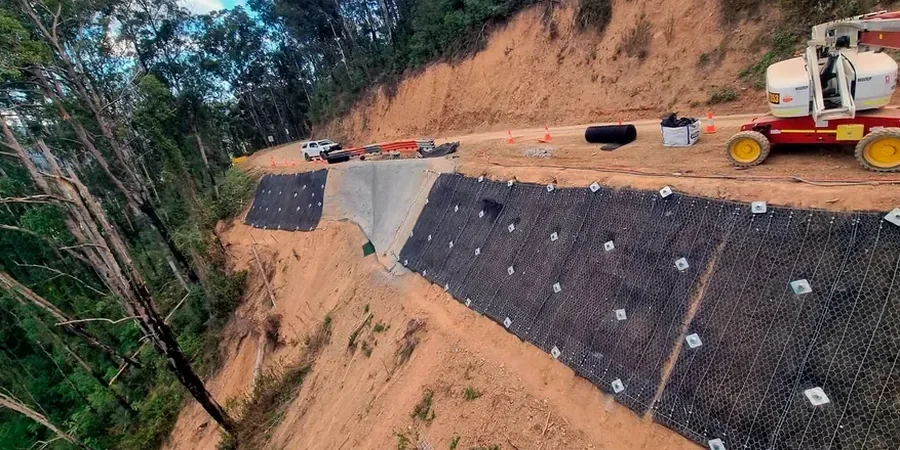
Every construction season in Missoula, we encounter the same scenario: a developer has a promising hillside lot in the Rattlesnake area or near the South Hills, and the initial site walk reveals steeper grades than anticipated. The city's topography, shaped by glacial Lake Missoula and the Clark Fork River valley, creates these dramatic slopes that look manageable until you start calculating the actual factor of safety. We've responded to enough emergency calls after spring thaw to know that slope stability analysis is not a box-ticking exercise here — it's the difference between a project that holds through freeze-thaw cycles and one that requires costly remediation. Our approach combines site-specific geology with the loading conditions your structure will actually impose, whether it's a single-family home on a cut slope or a commercial retaining scenario near the Bitterroot River. Before finalizing foundation plans, many local engineers also schedule a test pit investigation to verify the depth to bedrock and identify any paleochannel deposits that could compromise the analysis.
Missoula's glacial lake sediments can lose significant shear strength when saturated — what looks stable in August may behave very differently after spring melt.
Regional considerations
What we've learned from decades of project work in Missoula is that the most dangerous slopes are not always the steepest ones. Low-angle slopes in glaciolacustrine silt can creep almost imperceptibly for years before a wet spring triggers a sudden failure, and by then the foundation is already in distress. Another pattern we see repeatedly involves homeowners cutting into the toe of a slope to gain flat yard space, unknowingly removing the very material that was providing passive resistance against sliding. When we perform a slope stability analysis, we look beyond the obvious geometry to identify these less visible vulnerabilities — perched groundwater tables that form above clay lenses, root zone desiccation cracks that become preferential drainage paths, and historic landslide deposits that may not be obvious on a surface reconnaissance. Skipping this level of investigation on a Missoula hillside lot can lead to foundation cracks, retaining wall distress, or full-scale slope movement that is far more expensive to arrest than to analyze and design for upfront.
Questions and answers
When is a slope stability analysis required for a Missoula building permit?
Missoula County generally requires a geotechnical report with slope stability evaluation when the natural slope exceeds 15 percent or when the proposed construction is within a mapped landslide hazard area. The IBC Section 1806 triggers additional requirements for cuts and fills exceeding certain heights. We recommend checking with the Missoula Development solutions office for parcel-specific triggers, but in our background, most hillside lots in the Rattlesnake, South Hills, and Grant Creek areas will warrant at least a simplified stability check as part of the foundation design package.
What does a slope stability analysis cost in the Missoula area?
For a typical single-family residential hillside lot in Missoula, a slope stability analysis generally falls between US$1,360 and US$4,610 depending on the complexity of the slope geometry, whether subsurface exploration (borings or test pits) is already available, and how many cross-sections need to be modeled. A larger commercial site or one requiring seismic deformation analysis will be at the higher end of that range. We supply a fixed-fee proposal after reviewing the site topography and your project scope.
How long does it take to get results from a slope stability analysis?
If the necessary soil strength data is already available from prior drilling on the site, we can typically complete the analysis and deliver a stamped report within two to three weeks. When new subsurface exploration is needed — which is common on Missoula hillsides where glacial till and silt conditions vary significantly over short distances — the timeline extends to allow for drilling, laboratory testing, and modeling. We always coordinate the schedule with your overall project timeline so that the slope report does not become a critical-path delay.
Do you analyze both natural slopes and engineered cut slopes?
Yes, we evaluate both conditions. For natural slopes, the focus is on identifying pre-existing instability, evaluating the factor of safety under current and proposed loading, and assessing whether your structure can be safely set back from the slope crest. For engineered cut slopes, we model the proposed geometry, recommend stable cut angles specific to Missoula's glacial soils, and specify any reinforcement or drainage measures needed to maintain long-term stability through the region's freeze-thaw cycles.