← Home · Investigation

SPT Testing in Missoula — Standard Penetration Test for Geotechnical Investigation

Together, we solve the challenges of tomorrow.

LEARN MORE →

Around here, if you're breaking ground anywhere between the Clark Fork River and the Rattlesnake, you hit glacial till before you know it. That dense silty mix with cobbles — typical of the Missoula Valley floor — makes standard drilling a guessing game unless you're running the SPT (Standard Penetration Test) properly. We've seen N-values jump from 8 to refusal in less than two feet just because the split spoon caught a granite cobble dragged down from the Bitterroots. Combined with a CPT test in soft lakebed zones, the SPT remains the most practical way to get a defensible bearing capacity number without overthinking the stratigraphy in a town where the geology changes block by block.

In Missoula's glacial terrain, a 10-foot difference in boring location can mean the difference between dense till and liquefiable lake silt — and your SPT log has to capture that.

How we work

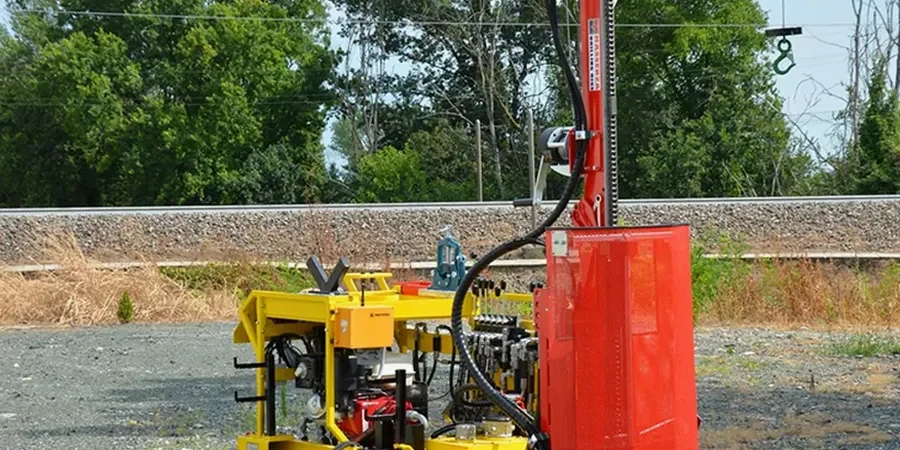
Missoula sits on a mix of glacial Lake Missoula deposits, recent alluvium along the Clark Fork, and weathered Belt Supergroup bedrock at the valley margins. Groundwater is shallow in the downtown corridor — often 8 to 15 feet below grade near the old mill sites. A standard SPT program here typically reaches 30 to 50 feet, with split spoon sampling every 5 feet per ASTM D1586. We run a safety hammer with an automatic trip on a CME-75 drill rig, which delivers roughly 60% energy efficiency. The blow counts correlate directly to drained friction angle and undrained shear strength for local silty gravels and low-plasticity clays.

We classify every sample in the field using ASTM D2487, logging color, moisture, and fines content immediately because oxidized till changes fast when it dries.
SPT Testing in Missoula — Standard Penetration Test for Geotechnical Investigation
Technical reference image — Missoula

Local considerations

The contrast between the Orchard Homes area and the South Hills is probably the best illustration of why you can't extrapolate SPT data across Missoula without thinking. Orchard Homes sits on deep alluvium with interbedded silt lenses — N-values under 10 are common in the upper 20 feet, and liquefaction potential is real when groundwater is within 15 feet of grade. Jump two miles south into the South Hills, and you're logging weathered bedrock with N-values above 50 by 15 feet. If you design a shallow footing in the valley using refusal criteria from a hillside boring, you're going to underestimate settlement by an order of magnitude. We've seen it happen — someone runs one boring at the toe of Mount Jumbo and assumes the entire parcel behaves like dense gravel. It doesn't. Missoula requires site-specific boring data per IBC Chapter 18, and the SPT is still the backbone of that investigation.

Need a geotechnical assessment?

Reply within 24h.

Email: contact@geotechnicalengineering1.org

Typical values

ParameterTypical value
Hammer typeSafety hammer with automatic trip, ~60% energy ratio
Sampling intervalEvery 5 feet (continuous in critical zones)
SamplerStandard 2-inch OD split spoon per ASTM D1586
Borehole diameter4 to 6 inches (rotary wash or hollow-stem auger)
N-value reportingN60 (energy-corrected) and N1,60 (overburden-corrected)
Soil classification basisASTM D2487 (Unified Soil Classification System)
Seismic site classIBC/ASCE 7-22 Site Class C to E, based on N-value and shear wave velocity

Related services

01

Standard SPT Borehole Package

Two to four borings to 30-50 feet with split spoon sampling every 5 feet, groundwater monitoring, and a signed log with N60 values. Typical for single-story commercial pads and light-frame residential on Missoula's valley floor.

02

Deep SPT with Packer Testing

Borings to 80-100 feet with SPT refusal monitoring and in-situ packer permeability in fractured bedrock. Applied for mid-rise structures near the Clark Fork where deep groundwater control matters.

03

Liquefaction Assessment SPT Suite

Closely spaced borings with SPT and thin-walled tube sampling in low-N zones, combined with grain-size analysis and Atterberg limits. Triggered when site class falls into E or F under ASCE 7 in Missoula's alluvial corridors.

Regulatory framework

ASTM D1586-18 — Standard Test Method for Standard Penetration Test (SPT) and Split-Barrel Sampling of Soils, ASTM D2487-17 — Standard Practice for Classification of Soils for Engineering Purposes (Unified Soil Classification System), IBC 2021 / ASCE 7-22 — Seismic site classification and foundation design provisions, ASTM D4633-16 — Standard Test Method for Energy Measurement for Dynamic Penetrometers

Questions and answers

How deep do SPT borings typically go for a Missoula residential project?

For a single-family home or duplex, we usually stop between 30 and 40 feet. That's enough to capture the transition from alluvial overburden into dense till or bedrock. If the site is in the city's liquefaction-susceptible zone near the Clark Fork, we may extend to 50 feet to satisfy IBC deep boring requirements.

What does SPT testing cost in Missoula?

A typical SPT boring program runs between US$510 and US$680 per boring for standard 30-foot holes with full logging and N60 reporting, assuming reasonable access and no excessive cobble refusals. Mobilization, traffic control on city streets, or deeper borings add to that. A two-boring minimum is common for most projects.

Can you run SPT tests in Missoula during winter?

Yes, as long as the ground isn't frozen deeper than about 8 inches. Our CME rigs operate in cold weather without major issues, though we schedule around heavy snow events in December and January. Frozen surface soils require pre-drilling through the frost layer before SPT sampling begins.

How do you correct SPT N-values for energy efficiency?

We measure hammer energy directly with a Pile Dynamics PDA instrument on the first boring of every project. The measured energy ratio, usually around 60% for our automatic trip hammers, gives us an energy correction factor (CE). That gets multiplied by rod length, borehole diameter, and sampler corrections per ASTM D4633 to produce N60. For liquefaction analysis, we apply the overburden correction to get N1,60.
Location and service area

We serve projects in Missoula and surrounding areas.

View larger map