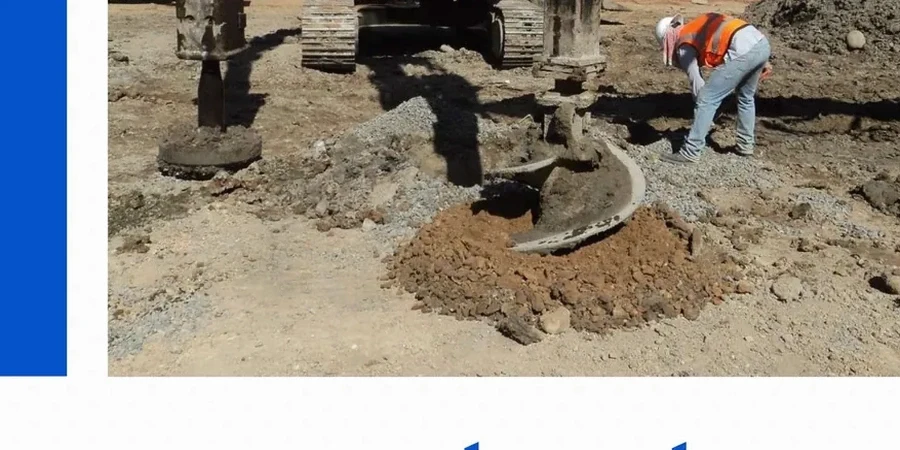
One of the costliest oversights we see in Missoula construction is treating all ground as equal. A contractor breaks ground in the Orchard Homes area, assumes stiff natural gravels, and hits saturated silts left by an old Clark Fork channel. The project stalls, the budget inflates, and the foundation design gets scrapped. Missoula’s valley floor is a patchwork of glacial lake deposits, floodplain sediments, and loose alluvium—conditions that make conventional shallow footings risky. Stone column design offers a reliable path forward. By installing compacted gravel columns through weak strata, we transfer loads to more competent layers and accelerate drainage. It’s a ground improvement strategy that turns problematic soils into buildable ground without deep excavation. We routinely pair this approach with CPT testing to map soft zones before design begins.
In Missoula’s floodplain, a single stone column can drain pore pressure from 40 square feet of surrounding soil—turning a liquefiable layer into stable ground.
How we work
The soil contrast between Missoula’s north side and the South Hills is striking. Near the university, stiff residual soils over weathered Belt Supergroup rock provide decent bearing. Move north toward the river, and you encounter 15 to 30 feet of compressible silts and clays that densify poorly under static load alone. Stone column design bridges this gap. We tailor column diameter, spacing, and depth to the specific stratigraphy, often referencing ASTM D1586 SPT data and laboratory consolidation results. A typical Missoula project involves columns 24 to 36 inches in diameter, installed in a triangular grid at 5- to 8-foot centers. The gravel backfill is clean, angular crushed stone meeting ASTM D448 gradation requirements. Installation uses a vibroflot or bottom-feed rig, displacing soil laterally while compacting the aggregate in lifts. For projects where settlement tolerance is extremely tight, we integrate a
plate load test program to verify modulus improvement before structural work begins.
The design phase also accounts for liquefaction mitigation—critical in Missoula’s seismic hazard environment, where loose saturated sands below the water table can lose strength during a moderate earthquake. A well-designed stone column grid provides both densification and a drainage path for excess pore pressure. We’ve applied this logic on commercial sites near Reserve Street, where the natural soil profile includes interbedded sands and silts. The result is a foundation solution that meets IBC performance criteria without the expense of deep piles. For clients concerned about lateral spread near riverbanks, combining stone columns with
slope stability analysis ensures global stability under seismic conditions.
Regional considerations
A four-story mixed-use building was proposed on Mullan Road, directly over 22 feet of soft silty clay with a shallow water table. The initial geotechnical report recommended driven piles, but the cost and vibration concerns from neighboring businesses made the client hesitate. We designed a stone column grid at 6-foot spacing, targeting an area replacement ratio of 18%. During construction, excess pore pressure in the clay dissipated within days instead of months because the columns acted as vertical drains. Settlement under the design load stayed below three-quarters of an inch—well within the structural engineer’s tolerance. Skipping this analysis and pushing shallow footings into that profile would have triggered differential settlement exceeding two inches, cracking partition walls and racking door frames within the first year. In Missoula’s seismic zone, the stakes are even higher: undrained loading during an earthquake can cause sudden bearing failure if the ground hasn’t been improved. The IBC requires liquefaction assessment for sites with saturated sands and a groundwater table within 50 feet of grade—conditions that describe much of the Missoula Valley floor.
Questions and answers
What does stone column ground improvement cost in Missoula?
For a typical commercial lot in the Missoula Valley, stone column design and installation ranges from US$1,630 to US$6,000 depending on depth, grid density, and access conditions. Sites with high groundwater or limited rig access push toward the upper end.
How do stone columns perform during a Missoula earthquake?
Stone columns mitigate liquefaction by densifying surrounding granular soils and providing vertical drainage paths that dissipate excess pore pressure. In Missoula’s seismic hazard environment, a properly designed grid can prevent bearing failure and lateral spread in loose saturated sands.
What soil types in Missoula benefit most from stone columns?
Loose alluvial sands, soft silts, and interbedded floodplain deposits common near the Clark Fork and Bitterroot Rivers respond well to vibro-replacement. The technique is less effective in thick, highly plastic clays, which require closer spacing and may need supplementary surcharging.
How long does stone column installation take on a typical Missoula site?
A crew with a bottom-feed vibroflot can install 20 to 30 columns per day under normal conditions. A 5,000-square-foot treatment area usually completes within three to five working days, not including mobilization, site prep, and post-installation testing.