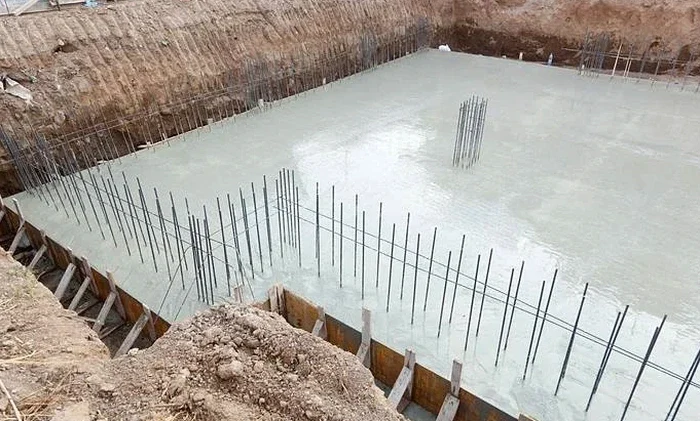
Designing a shallow foundation on Missoula’s north side versus the Rattlesnake Valley can feel like working in two different cities. Near the Clark Fork River, you encounter loose alluvial sands and silts left by Glacial Lake Missoula, while the benches to the east sit on dense, well-graded glacial outwash gravels. A footing that works beautifully in the Rattlesnake may require substantial widening just three miles west. The city’s 2,400 degree-day freezing index means frost depth here reaches 42 inches per IBC Table R301.2, and that single number drives wall section depths across every residential and light commercial project. For sites where the upper soils are marginal, we often correlate our design with data from a plate load test to confirm allowable bearing pressure before committing to excavation geometry.
Missoula’s 42-inch frost depth and borderline CL-ML soils make shallow foundation design a problem of moisture management as much as bearing capacity.
How we work
A recurring mistake we see is designers treating Missoula’s silty clay as if it were the stiff loess of eastern Washington. The surface crust dries hard in August, but after a wet October the same soil loses half its undrained shear strength. When we pull Shelby tube samples from a site on Broadway or Reserve Street, the Atterberg limits often plot right on the A-line, classifying the material as CL-ML — borderline between silt and lean clay under ASTM D2487. That ambiguity matters because settlement calculations change significantly depending on whether you model the material as drained or undrained. We run one-dimensional consolidation tests on every cohesive layer thicker than three feet, and for anything with more than 15 percent fines we check collapse potential at design flood elevation, a step that the standard Missoula County building permit checklist does not explicitly require but that saves foundation distress down the road.
Regulatory framework
ASCE 7-22 (Minimum Design Loads for Buildings), IBC 2021 (International Building Code, adopted by City of Missoula with local amendments), ASTM D2487 (Standard Practice for Classification of Soils for Engineering Purposes), ASTM D1586 (Standard Test Method for Standard Penetration Test), ACI 318-19 (Building Code Requirements for Structural Concrete)
Questions and answers
What is the typical cost range for shallow foundation design on a residential project in Missoula?
For a standard single-family residence on a lot with accessible soil data, shallow foundation design typically falls between US$1,980 and US$3,170. The final figure depends on the number of borings required, whether consolidation testing is needed for soft silt layers, and the complexity of frost protection detailing.
How does Missoula’s frost depth affect shallow foundation design?
The IBC mandates a 42-inch frost depth for Missoula. This means the bottom of exterior footings must extend below that elevation unless the foundation is frost-protected per ASCE 32. Interior footings within heated building envelopes can be shallower, but perimeter frost heave remains the dominant design constraint in the city’s frost-susceptible silts.
What soil conditions in Missoula trigger the need for a mat foundation instead of spread footings?
We typically switch to a mat foundation when the upper six to eight feet of soil consists of undocumented fill, loose alluvium, or highly variable silt with organic lenses. Several sites along the Bitterroot River corridor and in the lower Rattlesnake have shown these profiles, where differential settlement under discrete footings would exceed the ¾-inch total and ½-inch differential limits in ACI 318.
Which ASTM standards govern soil classification for shallow foundation design here?
We classify every sample using ASTM D2487 (Unified Soil Classification System). For strength, we apply ASTM D1586 for SPT blow counts and ASTM D4767 for consolidated-undrained triaxial testing when the foundation design requires undrained shear strength parameters for short-term bearing capacity checks.
How long does a shallow foundation design package take for a commercial project in Missoula?
From the first geotechnical boring to stamped design drawings, a typical commercial shallow foundation package takes three to four weeks. The schedule depends on laboratory consolidation testing — those tests require incremental loading over several days — and on City of Missoula building plan review timelines, which vary seasonally.