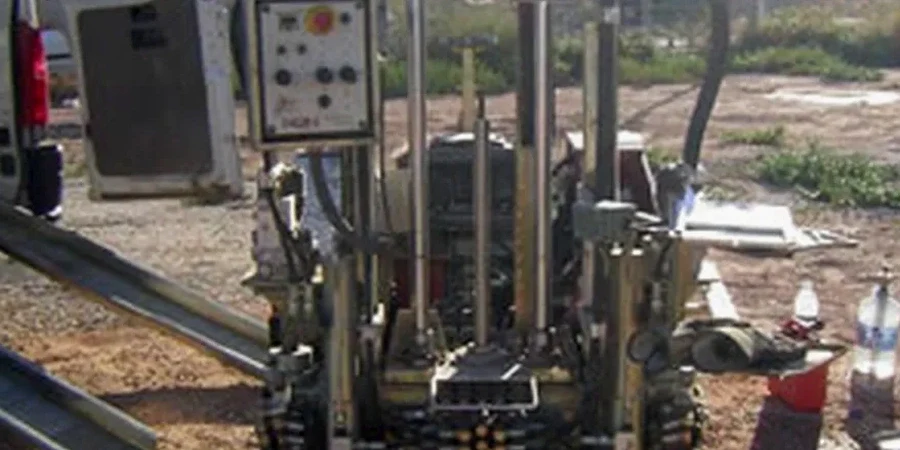
When a project site in Missoula sits near the Clark Fork River or over the old glacial lake sediments that fill much of the valley, guessing the stratigraphy from a few boreholes is a gamble. The subsurface here can shift from dense gravels to soft silts in a matter of meters, a consequence of the Missoula floods that scoured and redeposited the region thousands of years ago. Our laboratory team runs cone penetration testing to map those transitions continuously, providing a high-resolution profile of tip resistance, sleeve friction, and pore pressure without the sample disturbance that often plagues traditional drilling methods. For Missoula engineers dealing with variable alluvial deposits, the CPT offers a repeatable, operator-independent dataset that ties directly into bearing capacity calculations and settlement estimates. We pair this test with our grain size analysis when the cone data suggests a particular soil behavior type needs laboratory confirmation, and we correlate CPT results with our liquefaction assessment work for sites near the Bitterroot River where seismic demands under ASCE 7 are a real design constraint.
A single CPT push in Missoula's glacial lake deposits replaces four to six SPT borings for stratigraphic profiling, with zero cuttings and a digital log in your inbox the same day.
How we work
The rig we mobilize around Missoula County is a 20-ton truck-mounted penetrometer with a 15 cm² electronic cone capable of pushing through dense gravel lenses that stop lighter rigs cold during spring field campaigns. Hydraulic rams advance the cone at a constant 2 cm per second while onboard sensors log tip resistance, sleeve friction, and dynamic pore pressure fifty times per second, building a near-continuous digital log visible to the engineer in real time. In Missoula's typical soil profile, where glacial outwash sits over lacustrine clays and occasional cobble layers, we routinely reach refusal depths between 15 and 30 meters depending on the neighborhood. The cone itself carries an internal inclinometer that alerts us if the push exceeds 15 degrees of tilt, a critical feature when working on the sloping terraces east of Reserve Street where deviations can compromise the data. Our laboratory's CPT equipment is calibrated under ISO 17025 protocols, and every cone undergoes a zero-load check and saturation verification before it touches Missoula soil. Data interpretation follows Robertson's soil behavior type charts, coupled with local calibration experience from hundreds of pushes across the Missoula Valley, so the classification you see on the log reflects what we have actually excavated and tested in the lab.
Regional considerations
Missoula's winter freeze-thaw cycle, which cycles above and below 32 degrees Fahrenheit for nearly five months a year, creates a practical scheduling risk that surprises out-of-town consultants. CPT equipment relies on saturated cone elements and water-filled push rods to measure pore pressure, and a frozen water column inside the rod string renders the u2 sensor useless while risking damage to the transducer diaphragm. We schedule Missoula CPT work between March and November for this reason, and when a project demands winter data, we switch to our SPT drilling crew who can operate in sub-freezing conditions with split-spoon samplers. Spring brings its own challenge: the water table in the Missoula Valley rises sharply during April snowmelt, saturating the upper silty layers and reducing cone tip resistance readings enough to shift SBT classifications by a full category if the pore pressure correction is not applied correctly. Our team has pushed enough cones through Missoula's seasonal groundwater fluctuations to recognize these patterns, and we flag them in the report narrative so the design team does not misinterpret softened near-surface readings as permanently weak soil.
Regulatory framework
ASTM D5778-20 – Standard Test Method for Electronic Friction Cone and Piezocone Penetration Testing of Soils, ASCE 7-22 – Minimum Design Loads and Associated Criteria for Buildings and Other Structures (seismic site class from CPT data), IBC 2021 – International Building Code, Section 1803 geotechnical investigations, Robertson (1990, 2016) – Soil Behavior Type classification from CPTu data, ISO 17025 – General requirements for the competence of testing and calibration laboratories
Questions and answers
What does a CPT test cost for a project in the Missoula area?
A single CPT push in Missoula County typically runs between US$160 and US$260, depending on depth achieved, whether pore pressure dissipation tests are included, and mobilization distance from our yard. Most Missoula projects require two to four pushes to characterize the site adequately, and we supply a lump-sum quote after reviewing the location and target depth.
How does CPT compare to SPT for Missoula's soil conditions?
In Missoula's fine-grained alluvial and lacustrine deposits, CPT provides a continuous resistance profile where SPT gives values every 1.5 meters, so thin soft layers that control slope stability or settlement are far less likely to be missed. SPT remains superior in the coarse gravels and cobbles found along the Clark Fork's older terraces, where the cone often hits refusal while a split spoon can still advance. We recommend both methods on complex Missoula sites and cross-correlate the results.
Can you run CPT in winter when the ground is frozen in Missoula?
Winter CPT in Missoula is constrained by freezing temperatures because the cone's pore pressure sensor and the water-filled push rods are vulnerable to ice damage. We generally schedule cone work between March and November, and for projects with winter deadlines, we switch to SPT drilling or recommend delaying the CPT push until thaw. Pre-drilling through frozen crust is an option for shallow frost but adds cost and time.
What deliverables do I get after a CPT push in Missoula?
You receive a digital log package including corrected tip resistance, sleeve friction ratio, pore pressure, and Soil Behavior Type classification per Robertson charts, all plotted against depth. We also include dissipation test curves if requested, seismic shear wave velocity profiles for SCPTu pushes, and a summary table correlating CPT parameters to equivalent SPT N-values and soil unit weights for direct use in your foundation calculations.