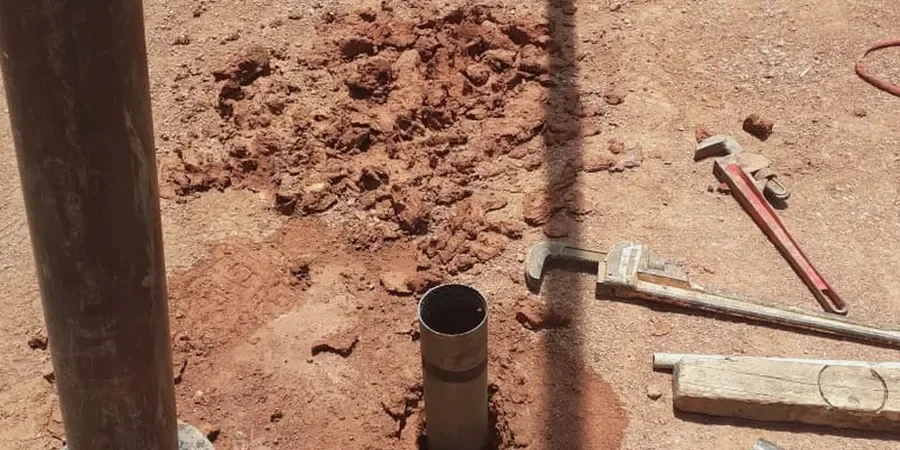
The Missoula Valley sits on an ancient glacial lakebed, where layers of silt, clay, and deep gravel channel the Clark Fork River’s groundwater. When a foundation hits clean gravel here, water flows fast—and that changes everything about your excavation plan. Contractors breaking ground near the aquifer in the Rattlesnake area or along the Bitterroot River quickly learn that surface guesses don’t work. A field permeability test removes that guesswork. Whether it’s a falling-head Lefranc method in fine alluvium or a Lugeon packer test in fractured bedrock near Mount Jumbo, we give you the in-situ hydraulic conductivity values that Missoula County plan reviewers expect. For projects requiring deeper stratigraphic control, we often pair this data with an SPT drilling program to verify soil layering across the site.
In Missoula’s glacio-fluvial deposits, a single Lugeon value can define the difference between a dry excavation and a flooded jobsite.
Regional considerations
Missoula’s urban growth has pushed development onto the valley floor’s lower terraces, where the static water table often sits within ten feet of the surface. Older neighborhoods near the Clark Fork were built before modern drainage codes, and today’s infill projects face far stricter dewatering regulations. If you underestimate the mass permeability of a gravelly deposit here, you don’t just get a wet basement—you risk triggering settlement in adjacent structures as groundwater drawdown compresses the surrounding silt. A Lefranc test in the saturated zone gives your engineer the real k-value to design a wellpoint system that works, not one that barely keeps up. The City of Missoula Public Works requires groundwater control plans for any excavation deeper than the water table, and a field permeability test is the foundation of that submittal.
Questions and answers
How much does a field permeability test cost in Missoula?
A single Lefranc or Lugeon test in the Missoula area typically runs between US$610 and US$980 per test section. The final cost depends on borehole depth, number of pressure steps, and whether we need to coordinate with your driller or mobilize our own rig.
When does Missoula County require a Lugeon test instead of a Lefranc?
The county generally requires a Lugeon test when your excavation or foundation interacts with fractured bedrock—common on the slopes of Mount Sentinel or in the Rattlesnake foothills. If the geotechnical report identifies rock with visible jointing, a packer test quantifies the fracture flow that a Lefranc test cannot measure.
What’s the difference between a falling-head and constant-head Lefranc test?
We select the method based on soil type. In Missoula’s silty deposits, where permeability is low, a falling-head test is faster and equally accurate. In cleaner sands and gravels, a constant-head test maintains a steady water level so we can measure flow directly, avoiding the rapid drainage that skews falling-head readings.