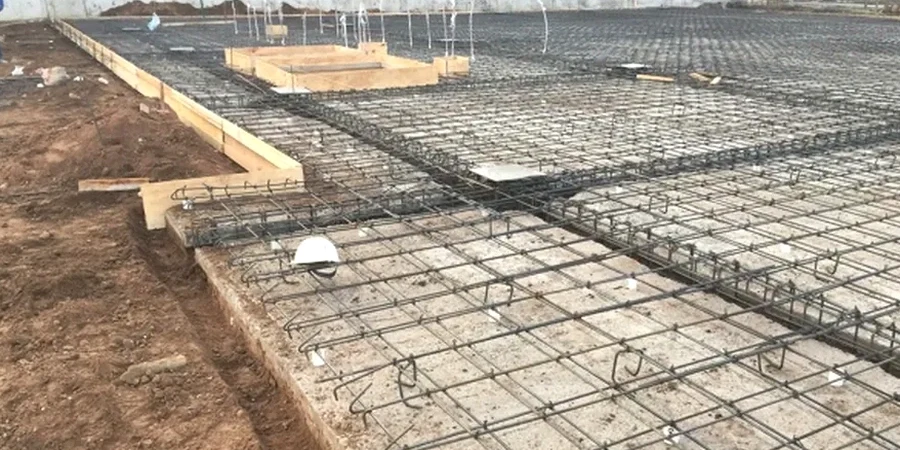
A common misstep on Missoula projects is treating a raft foundation as a simple thickened slab, ignoring the complex soil-structure interaction that glacial Lake Missoula sediments demand. When a site in the valley floor shows lenses of silt, clay, and sand mixed in a single boring log, a conventional footing design often leads to differential settlement exceeding half an inch before the framing is even complete. We step in at that point, applying continuum mechanics and finite element modeling to design a raft that bridges these inconsistencies. Rather than over-excavating and importing tons of engineered fill, a properly configured raft distributes building loads so effectively that local geotechnical variability becomes manageable. Our approach integrates site-specific data from in-situ permeability testing to verify drainage capacity beneath the slab, and we cross-reference results with the grain size distribution to confirm that the supporting soil matrix won't undergo volume change with seasonal moisture fluctuation. The goal is a foundation that works with Missoula's geology, not against it.
A well-designed raft in Missoula's lakebed sediments eliminates the differential settlement risk that plagues isolated footings, turning variable ground into a predictable bearing platform.
How we work
In Missoula, we consistently observe that the soil profile changes dramatically within a single city block — a condition traceable to the historical lakebed and subsequent alluvial reworking along the Clark Fork River. A raft foundation handles this far better than isolated footings, providing a unified structural diaphragm that resists differential movement. Our design process begins with a detailed bearing capacity analysis under both static and seismic conditions, per ASCE 7 Chapter 12, using modulus of subgrade reaction values derived from actual field data, not textbook assumptions. For sites near the river or in the Orchard Homes area, we often recommend coupling the raft design with targeted
vibrocompaction to densify loose granular layers before placing the mud slab. The thickness and reinforcement schedule are then optimized through iterative settlement analysis, ensuring the foundation remains serviceable under long-term creep and cyclic loading. The result is a solid, water-tight structural mat that doubles as the ground floor slab, reducing concrete volume and overall project cost compared to a deep pile solution. Where liquefaction potential is flagged in the geotechnical report, the raft can also function as a rigid diaphragm, limiting post-event differential displacement to tolerable ranges defined in ASCE 41.
Regional considerations
Sitting at 3,209 feet elevation in a valley carved by Glacial Lake Missoula, the city deals with a legacy of fine-grained lacustrine deposits that are notoriously susceptible to settlement. The biggest risk isn't bearing failure — it's long-term differential movement as silty lenses consolidate under load. A raft foundation mitigates this by spanning weak pockets, but the design must account for edge conditions where the water table, often just 6 to 10 feet down, fluctuates with spring runoff from the Clark Fork. Ignoring buoyancy and uplift pressures can float a raft or crack it at the perimeter. We model these hydrostatic forces explicitly, including the effects of a potential 500-year flood event on the foundation envelope. The 2020 earthquake swarm near Lincoln, Montana, served as a reminder that the Intermountain Seismic Belt remains active, making seismic detailing of the raft-to-column connection a non-negotiable part of our Missoula designs.
Questions and answers
What does a raft foundation design package cost in Missoula?
For a typical commercial or multi-family project in Missoula, the engineering fee for a complete raft foundation package — including geotechnical parameter review, FEM analysis, and signed construction drawings — ranges from US$1,120 to US$4,130. The final figure depends on the building footprint, number of columns, and complexity of the subsurface profile.
When is a raft foundation preferred over deep piles in Missoula?
Rafts become the economical choice when the competent glacial till is deeper than 15–20 feet, making end-bearing piles too long, or when the soil profile contains interbedded soft layers that would induce negative skin friction on piles. They also work well for buildings with large plan areas where the raft slab serves directly as the ground floor.
How do you account for Missoula's variable groundwater in the raft design?
We install standpipe piezometers during the site investigation to track seasonal water level changes. The raft is then analyzed for both drained and undrained conditions, with uplift pressures factored into the structural design. A drainage blanket and perimeter subdrain system are typically specified to reduce hydrostatic buildup beneath the slab.